Hail Damage Roof Repair in Highlands Ranch: Document First, Then Fight Fair
On June 1, 2026 a fast-moving cell came off the I-25 corridor around
1:15 in the afternoon and dropped hail across the south metro. In
Highlands Ranch the stones measured 1.25 inches, and hail mapping put more than
90,000 metro homes inside the 1-inch-or-larger swath. If your roof
was under it, the answer starts with documentation.
Highlands Ranch Is Mapped Hail Country
The NOAA storm record for Douglas County reads like a drumbeat. On
June 6, 2016, four separate hail reports landed in Highlands Ranch in one
afternoon, the largest at 1.75 inches. July 8, 2023 brought 1.50
inch stones. Then June 1, 2026 put 1.25 inch hail across the
community. Around the county the pattern is worse: Castle Rock took
2.50 inch hail in 2019 and Parker 1.75 in 2024. A Ranch roof that
lives 20 years without meeting damaging hail is the exception, not
the rule. The full record is in our
Highlands Ranch hail history.
What Hail Does To A Shingle Roof At 5,900 Feet
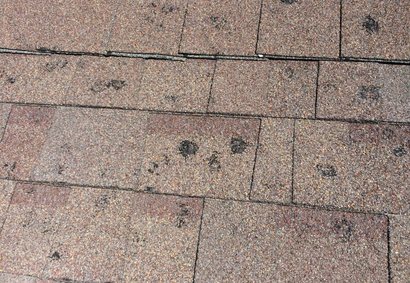
A 1.25 inch stone hits with enough energy to bruise the fiberglass
mat under the granules. The bruise does not leak that week. It
leaks in year two or three, after high-altitude UV, and Highlands Ranch gets
more of it than the flatland suburbs, has cooked the fractured
spot brittle. That delay is why insurers want damage documented
close to the storm date and why a free inspection after a mapped
storm is worth an hour of your time even if the ceiling is dry.
How The Insurance Claim Actually Runs
First, we inspect and photograph every slope, the soft metals, the
vents and the gutters, and write a dated damage report. Second, you
file the claim with your insurer, and we meet the adjuster on the
roof so the approved scope reflects what is actually up there,
test squares and all. Third, the paperwork: the HRCA submittal
still applies to storm replacements, the Douglas County permit
still gets pulled, and the final inspection still closes the job.
You pay your deductible and nothing above the contract.
Colorado law is specific about that last part. A contractor who
offers to eat your deductible is breaking the law, and any roofing
contract tied to an insurance claim carries a 72-hour right to
rescind. Both rules exist because of the storm-chase circus that
follows every metro hail event. A local process with written scopes
beats a clipboard at the door.
- Dated, photographed damage reports your insurer can verify slope by slope.
- Adjuster meetings on the roof, so approvals match reality instead of a drive-by estimate.
- Registered with Douglas County, HRCA paperwork included, deductible never waived.
Turn A Claim Into A Tougher Roof
A hail claim is the one moment the price gap between standard and
impact-rated shingles shrinks to almost nothing, because the
insurer is already paying for the base roof. Stepping up to a
Class 4 shingle
typically costs 15 to 25 percent over standard product on a retail
job, but on a claim you fund only the difference, and Colorado
insurers commonly return 5 to 25 percent in premium discounts.
We run both numbers in the scope so you can decide on your math,
not ours, and the HRCA color review clears impact-rated lines
just as readily as standard ones.
The First 72 Hours After Hail Hits The Ranch
Day one: photograph what you can safely reach from the ground,
window screens, downspouts, the AC fins, patio furniture, and
note the date and time. Dented soft metal is the corroboration
adjusters trust. Day two: book the roof inspection, and if the
roof is open to the sky, get it tarped; emergency tarping is
part of our repair
service and insurers expect you to prevent further damage.
Day three: with a written damage report in hand, file the claim.
What you should not do in those 72 hours is sign anything on a
doorstep. The 72-hour rescission right exists precisely because
of what gets signed on doorsteps after storms.
Test Squares: How Adjusters Count Hail Damage
Adjusters mark a 10 by 10 foot square on each slope and count
qualifying hail strikes inside it; cross the insurer's threshold,
commonly around eight per square, and the slope qualifies for
replacement. Which strikes count is where claims are won and
lost. Fractured mats count; blistering and old foot scuffs do
not, and an adjuster moving fast can file real bruises under
wear and tear. That is why we are on the roof for the walk,
chalk in hand, pointing at every strike inside every square.
Hail Claim Questions From Highlands Ranch Homeowners
Hail bruising is hard to see from the ground. The reliable check is a slope-by-slope inspection looking for fractured mats, granule loss over asphalt, dented soft metals and cracked boots. We photograph everything and tell you plainly if the roof does not have a claim's worth of damage.
Policies commonly allow around one year from the date of loss, but terms vary. The June 1, 2026 storm is recent enough that documentation matters more than urgency: get the roof inspected and dated photos on file now, then file with your insurer.
No. Colorado law prohibits contractors from paying or waiving insurance deductibles on roofing work, and an offer to do it is the clearest storm-chaser red flag there is. The same law gives you 72 hours to rescind a roofing contract tied to an insurance claim.
Hail is a named peril across Colorado and metro Denver is mapped hail country. Insurers price for it. What actually moves your premium long term is the roof itself, which is why many homeowners pair a claim with a Class 4 upgrade and its 5 to 25 percent discount.



 Free Roof Inspection